
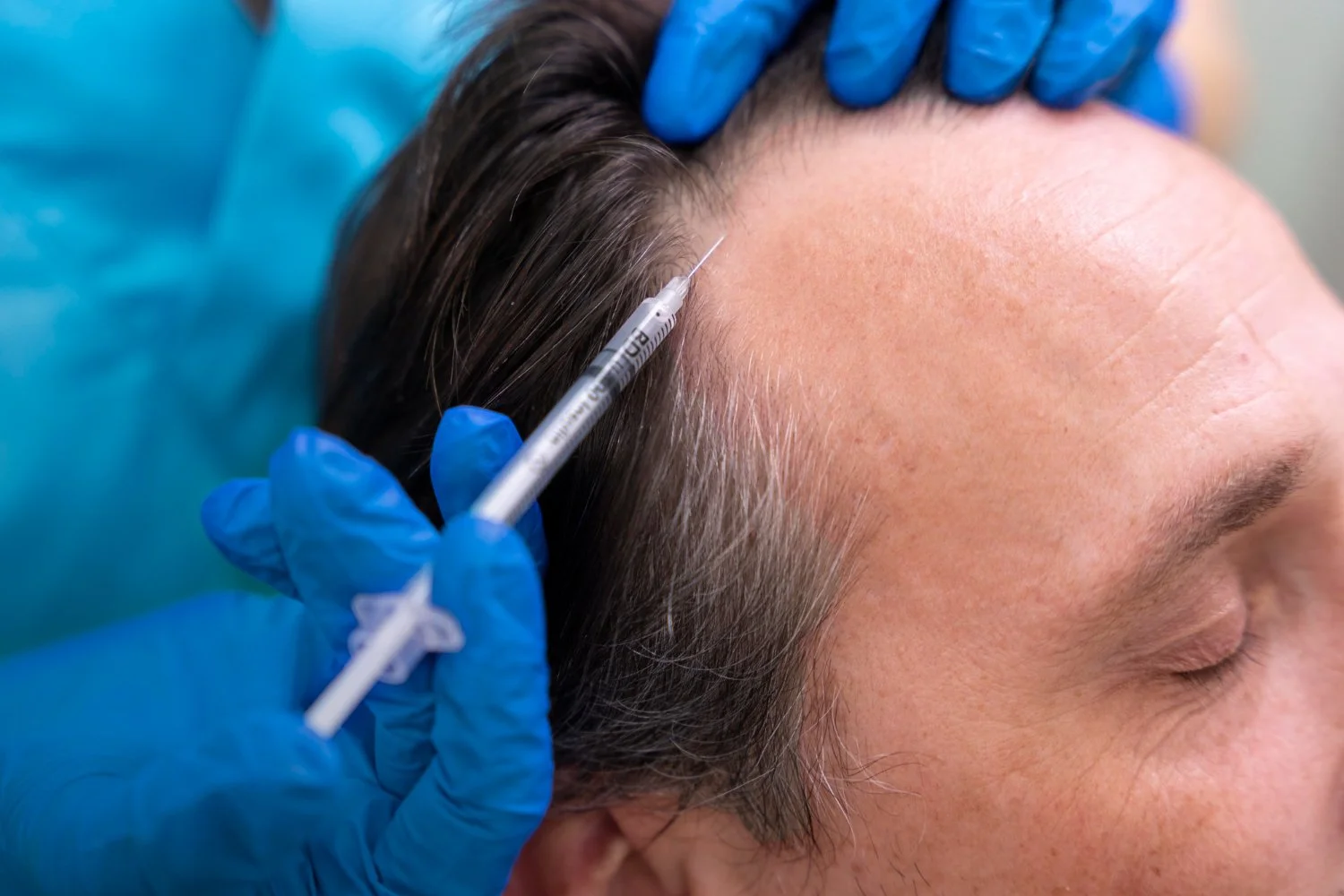
Hair thinning can be frustrating, especially when your hair starts looking less dense, your parting becomes wider or your hairline gradually changes. With several hair restoration treatments available in Dubai, choosing the right option can feel overwhelming. Two treatments attracting attention are platelet-rich plasma (PRP) and exosome therapy.
Both are discussed as approaches to supporting hair restoration, but they work differently and have different levels of scientific evidence behind them. PRP uses a concentration of platelets prepared from your own blood, whereas exosome-based products contain microscopic extracellular vesicles intended to influence communication between cells.
Although early research into exosomes is promising, important questions about their safety, effectiveness and standardisation remain. PRP has a more established clinical evidence base for certain types of hair loss, particularly androgenetic alopecia, although results still vary.
This guide compares PRP vs exosomes for hair loss, explains possible benefits and limitations, and outlines what to consider before choosing a treatment at Athena Derma in Dubai.
Why Does Hair Loss Happen?
Hair loss can develop for several reasons, and identifying the cause is the first step towards choosing an appropriate treatment. Androgenetic alopecia, commonly known as male or female pattern hair loss, is associated with genetic susceptibility and the effects of hormones on hair follicles. It often develops gradually, causing a receding hairline, thinning at the crown or a widening parting.
Other forms of hair loss can occur after illness, significant stress, childbirth, nutritional deficiencies, hormonal changes or certain medications. Scalp inflammation and autoimmune conditions can also affect hair growth.
Not every type of hair loss responds to PRP or exosome-based treatments. For example, temporary shedding after an illness may improve once the underlying trigger resolves, while some inflammatory or scarring conditions require specific medical treatment. If the cause is a nutritional deficiency or thyroid problem, addressing that issue is important before relying on a cosmetic procedure. A dermatologist may examine the scalp, review your medical history and recommend blood tests or other investigations when necessary.
Starting with an accurate diagnosis can prevent unnecessary spending and unrealistic expectations. It also helps determine whether a treatment is intended to reduce shedding, support existing hair follicles or complement another approach. Neither PRP nor exosomes should be presented as a guaranteed cure for baldness, and neither can reliably restore follicles that have been permanently destroyed by advanced scarring hair loss. A personalised assessment helps establish which options are reasonable for your condition.
A patient in his early forties visits a dermatology clinic after noticing his hairline has been gradually receding over the past five years. He has tried over-the-counter products without meaningful results. After a scalp examination and a review of his family history, the dermatologist confirms androgenetic alopecia. Treatment with topical minoxidil is discussed as the evidence-based first-line option, with PRP considered as a complementary procedure for maintenance of existing density. The patient is told that neither option reverses significant existing loss but that early intervention can slow further thinning in selected patients.
What Is PRP for Hair?
Platelet-rich plasma (PRP) is a treatment prepared from a small sample of your own blood. The blood is processed, usually through centrifugation, to separate and concentrate platelets within the plasma. Platelets contain growth factors and other signalling molecules involved in normal tissue repair. The prepared plasma is then injected into selected areas of the scalp according to the clinician's treatment protocol. PRP has been studied for androgenetic alopecia and may help improve hair density or reduce shedding in some patients.
How PRP works
Platelets release signalling molecules that participate in biological processes associated with tissue repair and cell activity. Researchers believe these signals may support aspects of the hair growth cycle and the function of existing follicles. However, the precise mechanisms and the degree of benefit vary, and PRP preparations are not identical across clinics. Differences in platelet concentration, preparation methods, injection technique and treatment schedules can influence outcomes.
A typical appointment involves drawing blood, processing the sample and injecting the prepared PRP into selected scalp areas. A dermatologist or trained medical professional should explain the procedure and assess whether it is appropriate for your diagnosis. The treatment uses your own blood, but that does not eliminate risks such as bruising, discomfort, infection or inflammation.
Who may benefit from PRP?
PRP is often considered for people with early or moderate pattern hair loss who still have viable hair follicles. It may be used as a standalone procedure in selected cases or alongside other evidence-based treatments. However, it is not suitable for every cause of hair loss, and the response can be unpredictable. Some patients notice reduced shedding or thicker-looking hair over time, while others experience little improvement.
The American Academy of Dermatology describes PRP as a treatment that can be safe and effective for some patients, while emphasising that results take time and not everyone responds.
"Starting with an accurate diagnosis can prevent unnecessary spending and unrealistic expectations. Neither PRP nor exosomes should be presented as a guaranteed cure for baldness."
PRP was originally developed and studied in the context of sports medicine and wound healing -- not hair loss. Its first documented use for hair restoration came much later, when clinicians began applying the same platelet-concentration principle to scalp injections. The growth factors platelets release -- including PDGF, VEGF, and IGF-1 -- are the same ones involved in skin and tissue repair, which is why researchers hypothesise they may also support follicle activity. PRP for hair is not a new invention; it has been in clinical use and study for over a decade.
What Are Exosomes for Hair?
Exosomes are tiny extracellular vesicles released by cells. They carry biological materials, including proteins and other molecules, that can participate in communication between cells. In hair restoration research, certain exosome preparations are being investigated for their potential influence on processes involved in follicle activity, inflammation and tissue repair. These products may be derived from different biological sources, and their composition can vary considerably. They are not the same as PRP, stem cells or conventional hair growth medication.
How exosome hair treatments are intended to work
The proposed mechanism is that exosomes may deliver signalling molecules that influence the activity of cells associated with hair follicles. Early studies have explored whether these signals could support hair density, hair thickness or aspects of the hair growth cycle. However, research is still developing, and the available clinical studies are relatively limited. Different products may use different sources, manufacturing processes and delivery methods, making it difficult to compare their results directly.
A systematic review published in 2025 examined 11 clinical studies of exosome-based treatments for hair loss. The authors reported encouraging findings across several hair measurements, but also highlighted small sample sizes, variation between studies and the need for better-quality clinical trials and standardised protocols. These limitations mean that promising early results should not be interpreted as proof that exosome therapy is superior to established treatments.
Are exosome treatments approved for hair loss?
Patients should ask careful questions about the exact product being offered, its regulatory status and the evidence supporting its use. The US Food and Drug Administration states that there are currently no FDA-approved exosome products. This is a statement about US regulatory status; it does not, by itself, determine the legal status of every product in the UAE. Patients in Dubai should verify the relevant local authorisation and product-specific requirements before treatment.
A clinic should be able to explain the product's source, manufacturing standards, intended use, risks and available clinical evidence. Be cautious of claims promising guaranteed regrowth, permanent results or a completely risk-free procedure. Because exosome-based hair treatment is still an emerging area, informed consent and transparent communication are particularly important.
PRP vs Exosomes: Key Differences
The main difference between PRP and exosome-based hair treatments is the biological material used and the amount of clinical evidence supporting each approach. PRP is prepared from your own blood and has been investigated for hair loss over a longer period. Exosome therapy uses extracellular vesicles from a particular source, with products and protocols that can differ substantially. Although both aim to influence biological processes associated with hair growth, neither guarantees regrowth.
| Feature | PRP for hair | Exosome-based treatment |
|---|---|---|
| Source | Platelets concentrated from the patient's own blood | Extracellular vesicles obtained from a specified biological source |
| Main proposed mechanism | Platelet-derived growth factors and signalling molecules | Intercellular signalling through molecules carried by vesicles |
| Clinical evidence | More established research for selected types of pattern hair loss | Promising early research, but limited and heterogeneous clinical evidence |
| Preparation | Blood collection and processing | Depends on the product and manufacturing process |
| Treatment schedule | Commonly involves an initial series followed by maintenance when appropriate | Protocols vary; no universally established schedule |
| Safety considerations | Injection-related pain, bruising, swelling and infection risk | Injection-related risks plus product-specific concerns about sourcing, quality and safety |
| Best next step | Confirm diagnosis and suitability with a dermatologist | Verify product identity, local regulatory status, evidence and suitability with a qualified clinician |
Which treatment has stronger evidence?
PRP currently has a more established evidence base for selected patients with androgenetic alopecia. Dermatology guidance recognises that it can help some patients, although results vary and maintenance may be required. Exosome research is encouraging, but the small number of clinical studies, differences in product composition and inconsistent protocols make it difficult to establish a reliable comparison.
A 2025 systematic review comparing exosome therapy, PRP and minoxidil described exosomes as promising but highlighted the need for further research to guide clinical decisions. The findings do not establish that exosomes are the best treatment for every patient or that they should replace established hair loss therapies.
For someone deciding between these options, the most useful question is not simply which treatment is newer. It is which treatment has sufficient evidence for their particular diagnosis, what risks are involved and whether a more established approach would be preferable.
A patient in her mid-thirties presents with diffuse thinning across the crown and a widening parting that has developed over the past two years. Blood tests reveal low ferritin levels. The dermatologist explains that iron deficiency is a recognised contributor to hair shedding and that addressing nutritional status is the appropriate first step -- before any injectable treatment. The patient is also counselled that androgenetic alopecia may be a concurrent factor and that progress should be reassessed once ferritin levels have been corrected. This case illustrates why establishing the cause of hair loss before proceeding with any procedure matters.
Which Is Better for Different Types of Hair Loss?
The right treatment depends on why your hair is thinning, how long the problem has been present and whether the follicles remain active. A treatment that may help one form of hair loss may have little value for another. A dermatologist should establish the diagnosis before recommending PRP, exosomes or another intervention.
For androgenetic alopecia, PRP may be considered as part of a treatment plan, particularly when thinning is identified relatively early. Conventional treatments, including topical minoxidil and certain prescription medications where appropriate, may also be discussed. Exosomes remain an emerging option, and patients should understand that the evidence is not yet strong enough to establish them as superior to established therapies.
For temporary hair shedding, such as shedding associated with illness or significant stress, the priority is identifying and addressing the trigger. Hair growth may recover once the underlying problem resolves, although recovery can take time. PRP or exosome treatment should not automatically be considered necessary.
For patchy hair loss or suspected scalp disease, medical evaluation is particularly important. Alopecia areata, fungal infections, inflammatory scalp conditions and scarring alopecias can require different treatments. Delaying appropriate diagnosis in favour of a cosmetic procedure may allow some conditions to progress.
Ultimately, PRP may be the more evidence-supported injectable option for selected patients with pattern hair loss, while exosome therapy may be discussed only with a clear understanding of its emerging evidence and product-specific risks. Neither should replace a diagnosis-led treatment plan.
"PRP may be the more evidence-supported injectable option for selected patients with pattern hair loss. Exosome therapy should be discussed only with a clear understanding of its emerging evidence and product-specific risks."
When a clinic quotes a fixed number of sessions upfront, ask what determines whether more will be needed and how progress is measured. A dermatologist should reassess hair density and shedding at each stage rather than completing a preset course regardless of response. For PRP, baseline photographs taken in consistent lighting at the start of treatment are a simple and useful reference for comparing progress at three and six months. Ask your clinician how they will track results.
How Many Sessions Are Needed?
The number of sessions depends on the treatment, the cause of hair loss, the severity of thinning and the individual's response. There is no single schedule that works for everyone, and treatment plans should be adjusted according to clinical assessment and follow-up.
For PRP, an initial series of appointments is commonly recommended. The American Academy of Dermatology describes a typical approach involving monthly treatments for the first three months, followed by maintenance sessions every three to six months when appropriate. This is a general reference rather than a prescription for every patient.
For exosome-based hair treatments, schedules vary according to the product and delivery protocol. The available research has not established one universally accepted number of sessions or maintenance interval. Patients should be cautious about providers promising guaranteed results after a fixed number of appointments.
Hair growth also takes time. Changes in shedding, density and thickness may develop over several months, and progress should ideally be assessed using consistent photographs and clinical measurements. Before starting, ask your clinician when improvement should be evaluated and what the next step will be if the treatment does not work as expected.
PRP vs Exosomes Cost in Dubai
The cost of hair loss treatment in Dubai varies according to the procedure, clinic, product, number of sessions and any additional treatments included in the plan. PRP pricing may depend on the preparation method and treatment area, while exosome pricing can vary considerably according to the product source, manufacturing process and protocol. There is no reliable, verified current Athena Derma price list available in the sources reviewed for this article.
| Cost factor | What to consider |
|---|---|
| Treatment type | PRP and exosome-based treatments involve different materials and protocols. |
| Number of sessions | An initial course and subsequent maintenance can affect the total expense. |
| Product and preparation | Ask about PRP preparation methods or the precise identity and source of an exosome product. |
| Consultation and testing | Diagnostic assessments or blood tests may be recommended when clinically indicated. |
| Additional treatments | Medication, topical products or other procedures may add to the overall cost. |
| Follow-up | Review appointments help assess results and determine whether further treatment is justified. |
Rather than choosing based on an advertised starting price, request a complete treatment quotation. Confirm what is included, whether maintenance is expected and what evidence supports the proposed product. For exosome treatment in particular, cost should not be the deciding factor without first verifying the product's regulatory status and safety information.
Contact Athena Derma for current pricing and to discuss which hair loss treatments may be suitable for your condition.
Side Effects and Recovery
PRP and exosome-based treatments both involve procedures that may cause temporary discomfort or local reactions. Understanding the differences and the uncertainties around each option is an important part of informed decision-making.
PRP side effects
Because PRP uses material prepared from your own blood, it avoids some concerns associated with introducing a product from another biological source. However, it is not risk-free. Possible side effects include pain at injection sites, tenderness, bruising, swelling and infection. Blood collection and processing also require appropriate hygiene and clinical protocols.
Exosome treatment risks
Exosome-based treatments may cause injection-related reactions, and their safety also depends on the source, purity, manufacturing standards and handling of the product. The available clinical research remains limited, so the absence of serious adverse events in small studies does not prove that all products are safe.
The FDA has warned about unapproved exosome products and reported serious adverse events associated with certain products marketed in the United States. Patients in Dubai should check the applicable UAE requirements and the specific product being offered.
After either procedure, follow the clinician's instructions regarding scalp care, washing and exercise.
Frequently Asked Questions
Conclusion
Choosing between PRP vs exosomes for hair loss requires more than comparing two injectable treatments. PRP uses concentrated platelets from your own blood and has a more established evidence base for selected forms of pattern hair loss. Exosome-based treatments are being investigated for their potential role in hair restoration, but their clinical evidence, product standardisation and regulatory status require careful consideration.
Before investing in treatment, identify the cause of your hair loss and discuss the available options with a qualified medical professional. Ask about realistic results, the number of sessions, maintenance requirements, side effects and the evidence supporting the proposed procedure. A personalised plan may involve PRP, established medication, another appropriate treatment or a combination of approaches. The priority should be a safe, evidence-informed decision rather than a promise of guaranteed hair regrowth.
Book a Hair Loss Consultation at Athena Derma
Concerned about hair thinning, a widening parting or a receding hairline? Athena Derma offers hair-related treatment options, including PRP and other therapies, subject to clinical assessment and suitability. A consultation can help identify possible causes of hair loss and clarify which options may be appropriate for your condition.
Before choosing an injectable treatment, ask about the product or preparation used, the clinician's qualifications, the supporting evidence, possible side effects and the total cost.
Book a Consultation